With temperatures rising and the grasses drying out, we need to be very careful with grass awns!
The lovely weather also invites more walks with our beloved furry friends. Long-haired pets, both dogs and cats, are the ones most prone to problems.
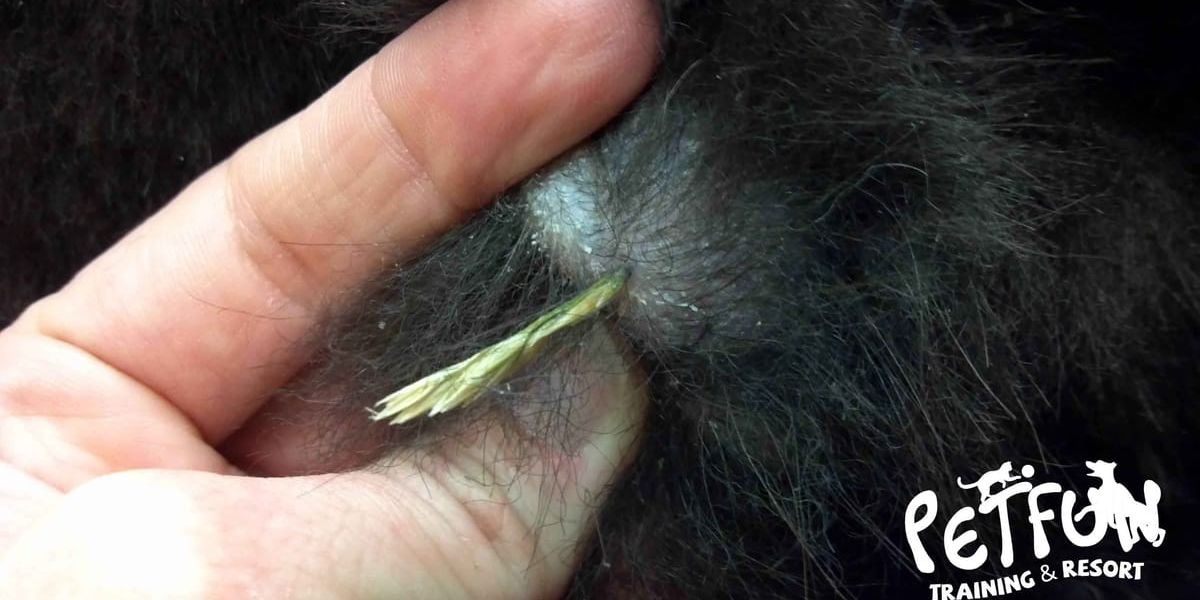
Grass awns cling to the animal's coat. Because of their shape, they can pierce the skin, causing wounds and infections, and can even work their way under the skin and form abscesses.
Resolving the problem always involves removing the awn, which in some cases may require surgery. The most commonly affected areas are the abdomen, the paws (between the toes) and the armpits — but they also frequently turn up in the ears, eyes, mouth and nostrils.
In the case of the ears, grass awns can enter the ear canal and cause a great deal of pain and discomfort. They cause otitis with very dark earwax and, if not removed in time, a ruptured eardrum and otitis media. The animal scratches its ear, shakes its head a lot and sometimes walks around with it tilted to one side.
Grass awns can cause serious damage to the eyes: your pet scratches the eye, which may be red, watering and half-closed. Keep an eye out if your pet is sneezing and desperately scratching its muzzle — it may have grass awns in its nostrils.
What precautions should you take?
Whenever you walk in the countryside with your pet, brush them straight after the walk and inspect their coat, paying particular attention to the paws (between the toes and under the paw pads) and the ears.
Remove any grass awns carefully so as not to hurt your pet. If they are already embedded, it is best to take them to the vet.
Do not remove grass awns from the ears unless they are right on the outside — removal should be carried out by a veterinary surgeon.
Consult your vet with any questions!